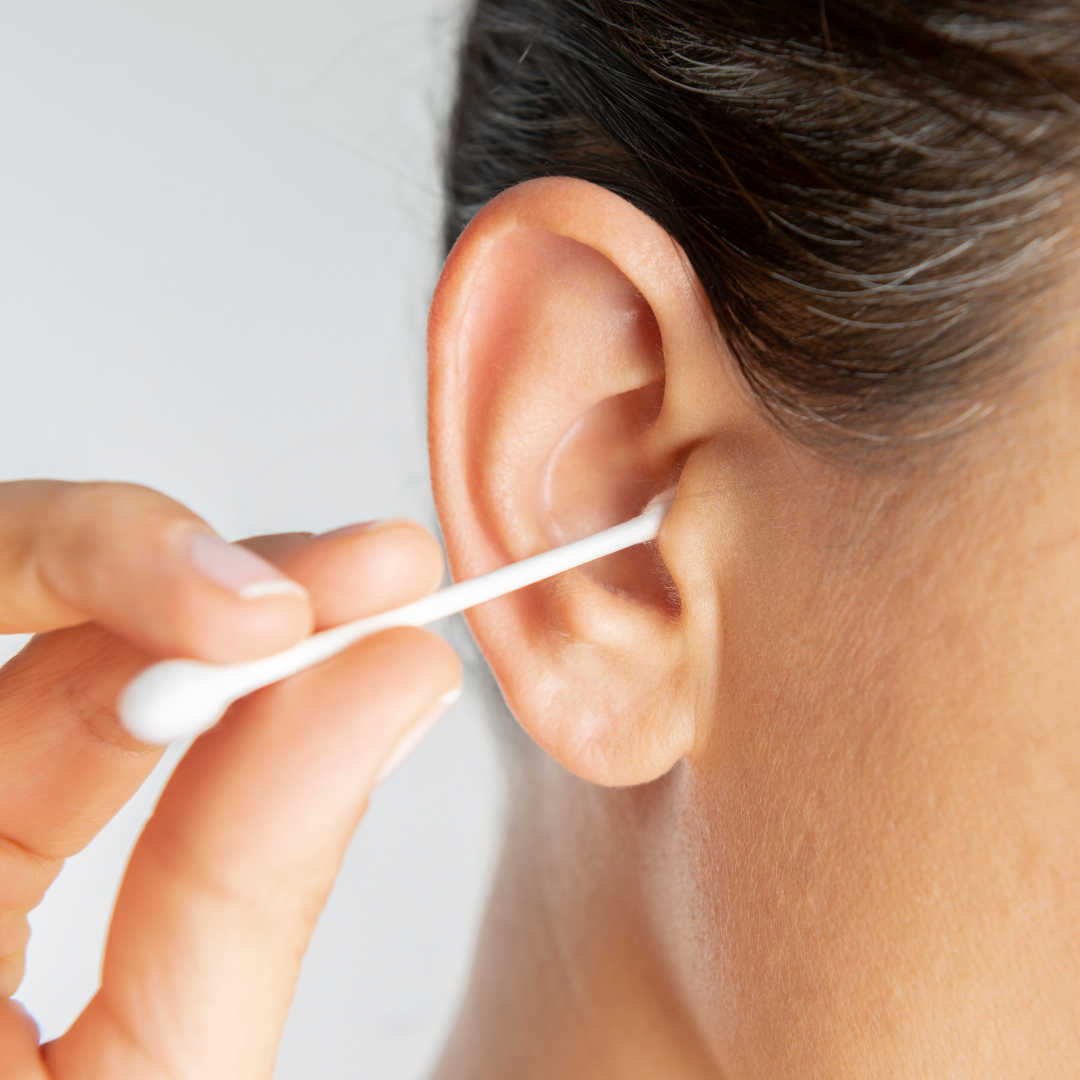
Even though cotton swabs seem practical for routine hygiene, probing the inner canal creates deeper impactions and threatens long-term ear health. We assess whether your earwax demands professional intervention and provide customized care strategies that match your clinical profile. Ears don’t always need manual cleaning; however, if wax builds up, we can help patients safely remove excess wax.
Why Are Q-Tips Bad for Your Ears?
In audiology, earwax (cerumen) is recognized as a vital protective substance rather than dirt. Cerumen collects particulate matter, inhibits microbial proliferation, moisturizes the epithelial lining, and shields sensitive canal tissues. Normal jaw articulation and progressive skin turnover transport old cerumen toward the external ear opening, where it naturally detaches.
Using a cotton swab within the ear canal halts this physiological self-cleaning function. Although the cotton may collect a small amount of wax, it often pushes the remaining material closer to the eardrum. Repeated use can pack wax into a firm blockage and create the plugged sensation that encourages even more cleaning.
You may gently utilize cotton swabs across the external auricle, but you should avoid inserting them into the internal canal.
Potential Ear Damage and Complications from Q-Tips
The skin lining the ear canal is thin and easily scratched. Minor scratches can trigger localized pain, bleeding, and bacterial infiltration, substantially elevating the risk of otitis externa. In addition, the cotton head can loosen and become retained as an obstructing foreign object in the ear.
Common mechanical traumas from swabs include:
- Earwax compressed tightly against canal walls
- Scratches, irritation, swelling, or bleeding
- Bacterial or fungal ear canal infection
- A cotton tip or other material trapped in the ear
- Structural tears or perforations across the eardrum
- Ossicular chain disruption or damage behind the tympanic membrane
- Transient or irreversible shifts in hearing thresholds
- Persistent tinnitus, balance instability, or severe otalgia
Though critical trauma is uncommon, an unexpected collision, a sudden slip, or overzealous penetration can cause extensive ear injury.
Recommended Schedules and Timelines for Cerumen Removal
For the average individual, scheduled cerumen removal is completely unnecessary. Normal anatomical mechanisms steadily push cerumen toward the exterior, where regular washing rinses the visible concha. Excessive cleaning strips natural oils, inflames delicate canal skin, and substantially elevates the chance of infection or impaction.
Clinical clearing is warranted if cerumen occludes the auditory pathway, prevents diagnostic evaluation of the eardrum, affects a hearing aid, or sparks discomfort.
Safe Protocols for Managing Cerumen at Home
If earwax is not causing symptoms, leaving it alone is usually the safest option. Simply cleanse the external ear using a damp, gentle washcloth, allowing the internal canal to clear independently.
When wax needs softening, we may recommend an over-the-counter cerumen-removal product or drops containing ingredients such as mineral oil, glycerin, saline, or carbamide peroxide. Follow the package directions meticulously regarding droplet quantity and consecutive days of use. Cease use at once if you experience localized pain, acute vertigo, cutaneous rash, or intensifying discomfort.
At-home ear flushing is not suitable for all ears and demands prior clinical verification and step-by-step guidance from a provider. Under no circumstances should you ever use a pressurized dental oral irrigator in the ear. Reject risky methods such as ear candling, rigid metal scoops, camera-guided probes, hairpins, and home suction gadgets. Such unapproved devices easily burn canal walls, cut fragile skin, puncture the eardrum, or drive cerumen deeper.
When Should I See a Doctor for Earwax Removal?
You should book a clinical appointment if your ear feels blocked following softening drops, cerumen is deeply wedged, or home methods fail to work. Seeking professional care is essential if a patient cannot stay still, exhibits narrow canal anatomy, wears hearing aids, or possesses medical risks that rule out drops or flushing.
You should seek professional assessment for:
- Persistent otalgia, stubborn itching, or painful sensitivity around the ear
- Hemorrhagic discharge, purulent fluid, clear otorrhea, or foul-smelling drainage
- Systemic fever or noticeable swelling around the auricle
- New acoustic tinnitus sounds or unstable balance sensations
- Sudden reduction in hearing or auditory loss that persists after wax extraction
- Concern regarding a perforated eardrum or foreign cotton debris
- Repeated wax accumulation that impairs prescription hearing devices
Any rapid-onset hearing loss in one ear must be evaluated as an emergency rather than dismissed as a wax plug. Immediate assessment allows clinicians to differentiate an external canal obstruction from an urgent inner-ear pathology.
How Can a Doctor Remove Excess Earwax?
The clinical process starts with high-magnification otoscopy or microscopy to establish cerumen presence and screen for infections, abrasions, or tympanic perforations. The safest removal method depends on wax consistency, canal anatomy, medical history, previous surgery, and the patient’s ability to tolerate the procedure.
Expert removal procedures include:
- Application of enzymatic softening drops before or during extraction
- Gentle, temperature-controlled fluid irrigation provided the tympanic membrane is intact
- Precision micro-suction under continuous microscopic visualization
- Manual removal with a loop, curette, or small forceps
Direct illumination and magnification enable the provider to spare sensitive canal skin and stop promptly upon patient feedback. Dense or desiccated cerumen impactions frequently necessitate using more than one removal method. Upon completing removal, the clinician performs a final inspection to confirm optimal canal and eardrum health. When symptoms like fullness, tinnitus, vertigo, or hearing loss continue, supplementary audiological assessments can uncover alternate conditions.
Book a Professional Earwax Evaluation and Removal
If your ear feels occluded or your hearing acuity drops, book a professional consultation with our team rather than using a Q-Tip. The diagnostic session entails reviewing your symptom timeline, past otologic procedures, hearing aid usage, past home treatments, and risk factors for recurring cerumen. Contact us now to schedule an appointment for comprehensive, expert earwax removal.
