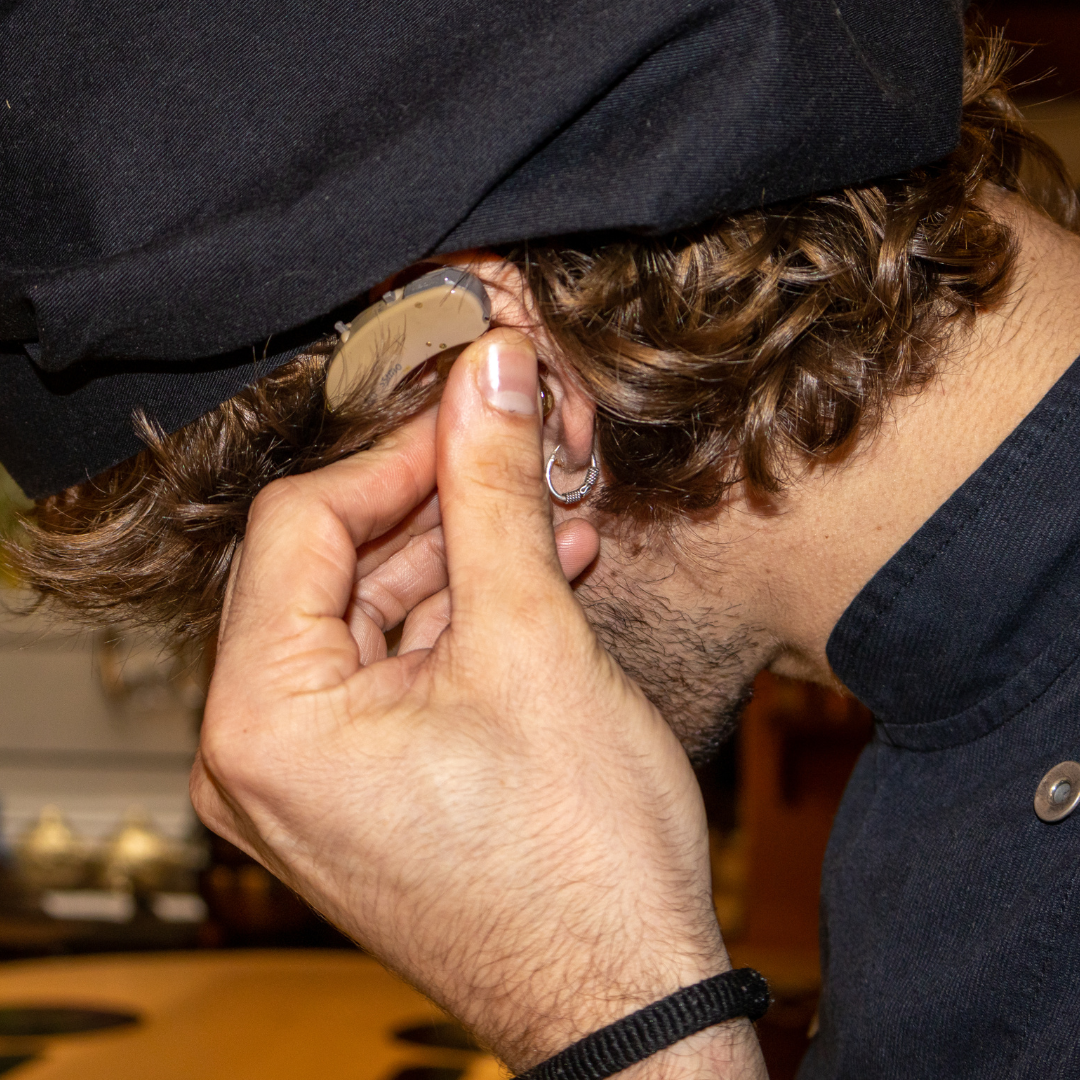
Maintaining dinner dialogue proves demanding when chaotic ambient noise strains your concentration and hearing. Our practice can evaluate hearing in both quiet and noisy conditions to identify what makes these environments difficult. Once the diagnostic etiology of your difficult hearing is established, we implement personalized clinical and technological strategies.
Explaining Normal Quiet Hearing Versus Restaurant Listening Fatigue
Quiet rooms provide a favorable signal-to-noise ratio, meaning a speaker’s voice is much clearer than the sounds around it. Restaurants create the opposite situation. Overlapping chatter, piped music, kitchen clatter, and hard-surface reverberation mask speech, forcing the brain to expend immense cognitive effort to track conversation.
This problem can occur with high-frequency hearing loss, auditory-processing difficulty, or age- and noise-related changes. Attention, fatigue, dim lighting, and distance from the speaker may make it worse. It is common to display normal baseline audibility on conventional hearing tests while failing comprehensive speech-in-noise testing. Consistent difficulty following restaurant conversation warrants clinical investigation even when everyday hearing seems largely unaffected.
Clinical Evaluation of High-Frequency Hearing Loss
We initiate evaluation by exploring challenging acoustic environments, acoustic trauma history, subjective tinnitus, prescription drug profiles, and unilateral ear changes.
Pure-tone audiometric evaluations measure the absolute quietest sounds audible across specific octave frequencies using air and bone conduction. High-frequency loss often creates an audiogram pattern in which thresholds become poorer as pitches rise. Supplementary assessments routinely include diagnostic tympanometry to analyze middle-ear status alongside word-recognition testing to determine speech clarity.
Because a quiet booth does not recreate a busy dining room, speech-in-noise testing can add valuable information. It measures how well you recognize words or sentences as competing sounds become louder. Together, these audiological findings indicate whether the issue involves sound audibility, speech intelligibility, noise-processing dysfunction, or multiple compounding factors.
The Role of Central Auditory Processing Disorders in Adults
An auditory processing disorder degrades the central nervous system’s capacity to organize and interpret complex sound inputs. The physical ear mechanisms may capture tones correctly, but the central brain pathways struggle to filter competing inputs, parse similar consonants, or interpret rapid speech. We systematically verify peripheral hearing health before establishing whether an advanced auditory-processing evaluation or medical referral serves your needs.
Behavioral Strategies for Hearing Clearly in Loud Venues
Targeted behavioral changes optimize the acoustic speech signal reaching your auditory system while providing clear visual context. Before dining out, choose a quieter restaurant or visit during an off-peak time. Establishments designed with high-walled booths, acoustic wall treatments, heavy fabrics, and carpeting reduce reverberation far better than modern industrial spaces with bare surfaces.
When arriving at the dining venue:
- Select a secluded table situated away from prep kitchens, crowded bar stations, loudspeaker zones, and large parties.
- Sit with a perimeter wall directly behind you to cut down on ambient noise approaching from the rear.
- Position yourself directly opposite your companions where direct lighting highlights their facial expressions.
- Maintain the shortest comfortable physical distance between yourself and your conversation partner.
- Place your better-hearing ear toward the person you most want to hear.
- Ask the speaker to rephrase the missed portion instead of repeating everything.
- Confirm important details rather than pretending to understand.
- Allow yourself a short listening respite when auditory concentration starts to feel drained.
- Request that friends speak with crisp clarity rather than speeding through dialogue.
- Yelling distorts natural speech formants and rarely makes spoken words easier to decipher.
Advanced Technology for Hearing in Background Noise
Determining the proper hearing technology hinges on the underlying disorder, everyday listening environments, and whether peripheral hearing loss is diagnosed. Customized hearing aids employ directional microphone beamforming, noise cancellation algorithms, and targeted dining programs to prioritize speakers in front while lowering ambient noise. Realistic expectations are vital, since even advanced hearing devices cannot completely erase background conversational chatter.
Utilizing an external remote microphone can deliver a dramatically superior signal-to-noise ratio. Positioned near or clipped to the speaker, the device transmits raw speech audio directly to paired hearing aids or external listening receivers. By streaming directly, this technology overcomes acoustic falloff from distance and surrounding environmental noise.
Other useful options include:
- Wireless conference table microphones that capture multi-speaker discussions
- Integrated telecoil programs for tapping into venue-wide induction loop systems
- Smartphone live-captioning platforms providing instant speech-to-text visual support
- Over-the-counter hearables equipped with directional speech-enhancement algorithms
- Decibel-level applications and restaurant rating guides for finding quiet tables
We will help compare available technology, verify device compatibility, and instruct you on utilizing your selected hearing equipment.
Professional Audiological Solutions for Loud Listening Environments
Undergoing a formal hearing evaluation takes your care beyond the limited baseline of hearing adequately in quiet spaces. We assess the specific acoustic settings, speaker dynamics, and volume levels that disrupt your hearing to administer targeted evaluations. The assessment may include pure-tone thresholds, middle-ear testing, word recognition, and speech-in-noise measures. Diagnostic auditory-processing testing may be recommended if your clinical symptoms and baseline evaluations suggest central auditory dysfunction.
Any sudden, asymmetric, or rapidly deteriorating hearing loss demands immediate medical evaluation by an ear, nose, and throat physician. Comprehensive clinical care targets the physiological roots of hearing difficulties rather than simply writing them off as bad restaurant acoustics.
Book Your Comprehensive Hearing Evaluation Now
If struggling through dinner conversation leaves you mentally exhausted, detached, or constantly guessing, schedule a complete hearing evaluation with our clinic. We can evaluate targeted solutions to optimize your hearing in noisy environments using prescription hearing aids, assistive listening technology, or communication strategies tailored to you.
Contact our audiology office today to schedule your evaluation and move toward effortless, confident conversations.
